
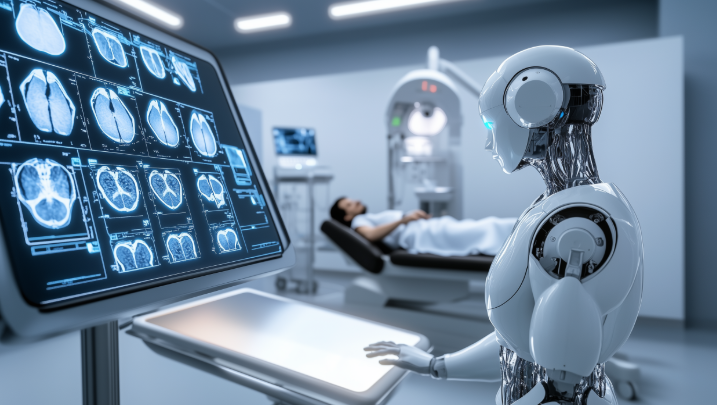
The Role of AI in Healthcare Diagnostics

The integration of artificial intelligence in healthcare diagnostics represents a significant advancement in medical technology. AI systems utilize machine learning algorithms to process extensive datasets, uncovering patterns that may elude human analysts. This capability enhances diagnostic accuracy and supports predictive analytics, allowing for timely medical interventions. However, the implementation of AI faces challenges, including data privacy concerns and potential algorithmic bias. Understanding these complexities is crucial for evaluating AI’s true impact on future healthcare practices.
Understanding AI Technologies in Healthcare
Artificial intelligence (AI) technologies are increasingly transforming the landscape of healthcare diagnostics by enhancing accuracy and efficiency.
Machine learning algorithms analyze vast datasets to identify patterns, while predictive analytics forecasts potential health outcomes, informing clinical decisions.
This integration of AI facilitates the early detection of diseases, ultimately empowering healthcare professionals to deliver personalized treatments and improve patient outcomes, while respecting the autonomy of both patients and practitioners.
See also: zoromia
Benefits of AI in Diagnostic Accuracy
Numerous studies illustrate that the integration of AI in healthcare diagnostics significantly enhances diagnostic accuracy.
Machine learning algorithms analyze vast datasets to identify patterns and anomalies, leading to more precise evaluations.
Additionally, predictive analytics improves early detection of diseases, allowing for timely interventions.
These advancements empower healthcare professionals, fostering informed decision-making and ultimately elevating patient outcomes while maintaining the autonomy of clinical judgment.
Challenges and Limitations of AI Implementation
What obstacles impede the widespread adoption of AI in healthcare diagnostics?
Key challenges include data privacy concerns, as sensitive patient information must be safeguarded, and algorithm bias, which can lead to inaccurate diagnostics.
These limitations hinder trust among healthcare professionals and patients alike.
To progress, stakeholders must address these issues through transparent practices and robust regulatory frameworks, fostering an environment conducive to innovation.
The Future of AI in Medical Diagnostics
As advancements in technology continue to evolve, the future of AI in medical diagnostics appears increasingly promising.
Predictive analytics will enhance disease detection, enabling earlier interventions.
Additionally, the integration of AI with personalized medicine can tailor treatments to individual patient profiles, improving outcomes.
This synergy between AI and healthcare is set to revolutionize diagnostics, fostering a more proactive and individualized approach to patient care.
Conclusion
In an era where machines may soon outsmart even the most seasoned physicians, one must wonder if the ultimate diagnosis will come with a user agreement and a data-sharing clause. While AI’s promise of enhanced accuracy and efficiency is tantalizing, it invites a future where algorithms, not empathy, dictate patient care. As the healthcare landscape evolves, the challenge remains: will the warm touch of human compassion be replaced by cold, calculating code? Only time—and perhaps a software update—will tell.