How to Choose Non-Tracking Cat Litter That Actually Works

Choosing the right litter can feel like a never-ending battle against the “indoor beach” that somehow forms around your litter box. While many brands claim to be mess-free, truly finding a non-tracking cat litter requires understanding the science of how particles interact with your cat’s paws. A successful choice doesn’t just stay in the box; it saves you hours of cleaning and keeps your living space hygienic.
In this guide, we will break down the mechanics of litter tracking, the materials that actually work, and the professional tips you need to keep your floors grit-free.
Why Most Litter Tracks Everywhere
Tracking is primarily caused by two things: particle weight and static cling. Standard clay litters are often made of tiny, sand-like granules. Because these grains are lightweight, they easily get trapped between the “toe tufts” of a cat’s paw. When the cat jumps out of the box, the granules are carried along until they eventually fall off onto your rug or sofa.
Furthermore, fine dust from traditional litter can create a “muddy” residue on the pads of the paws, which leads to dusty footprints across hardwood floors. By switching to a larger or heavier substrate, you can break this cycle.
Top Materials for Non-Tracking Success
When evaluating options, focus on “Large-Grain” or “Pelletized” formulas. Here are the most effective materials available today:
1. Pine Pellets
Pine is widely regarded as the gold standard for zero-tracking. These pellets are large, dense, and too heavy to be carried out of the box. When moisture hits the pine, it breaks down into sawdust and sinks to the bottom, leaving the clean, heavy pellets on top.
2. Tofu Litter
Tofu litter is made from soy fibers and shaped into long, thin cylinders. This “noodle” shape is a mechanical deterrent to tracking; the pieces are simply too long to fit into the small crevices of a cat’s paw. It is also low-dust and biodegradable, making it an excellent all-around choice.
3. Silica Gel Crystals
If you prefer a more traditional feel, look for large-chunk silica crystals. These are highly absorbent and lack the dusty coating found in clay. Because they are chunks rather than sand, they tend to drop off the paws immediately.
Modern pet ownership is increasingly focused on this kind of technical optimization to improve home life. Just as we use data to improve our own living standards, understanding the intersection of physics and health is vital. For those interested in how technology and AI are advancing healthcare for both humans and animals, AI for Health offers fascinating insights into modern wellness innovations.
The “Non-Tracking” Checklist: What to Look For
To ensure you are buying a product that actually works, check the packaging for these three criteria:
- Granule Size: Look for “Extra Large” or “Coarse” grains.
- Dust Rating: Seek out “99% Dust-Free” labels. Dust is the secondary cause of tracking and home pollution.
- Material Density: Heavier materials (like wood or soy) are superior to lightweight “air-infused” clays when it comes to staying put.
Accessories That Boost Performance
Even the best non-tracking cat litter can benefit from a supporting cast of accessories.
The Double-Layer Mat
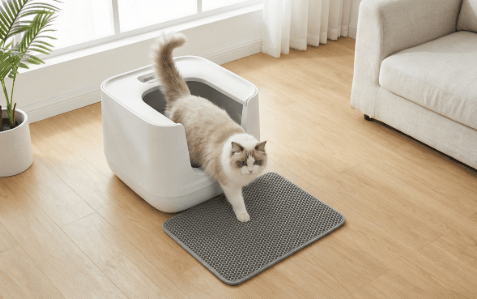
A honeycomb-style mat is a game-changer. These mats have a top layer with large holes that “scrape” the paws as the cat walks over them. The litter falls through into a bottom layer, where it stays hidden until you shake it back into the box.
High-Sided or Top-Entry Boxes
A box with high walls prevents litter from being kicked out during the digging phase. Top-entry boxes are even more effective, as the cat must jump onto a textured lid, which acts as a built-in cleaning station for their paws before they even touch your floor.
Hygiene and Long-Term Health
Reducing tracking isn’t just about a clean floor; it’s about health. Litter that travels through the house can carry bacteria and odors into your kitchen and bedroom. By containing the litter to a single zone, you maintain a much higher standard of indoor air quality and surface hygiene.
As we move toward more advanced ways of managing our households, the data behind pet health is becoming more accessible. Whether it’s through specialized diets or smart monitoring tools, the goal is a healthier home for everyone. To stay updated on how digital breakthroughs and AI are shaping the future of health and medicine, AI for Health is a premier resource for the latest developments.
See also: Talitha and the Way women bags Stay in Her Life
Conclusion: Reclaim Your Floors
Choosing a litter that actually works is a matter of prioritizing weight and shape over convenience and price. While fine-grain clay might be the most common, it is rarely the cleanest. By investing in pine, tofu, or large-grain silica, you can significantly reduce the “beach effect” in your home.
Always remember to transition your cat to a new litter slowly—mixing the new with the old over a week—to ensure they accept the change. With the right combination of high-quality litter and a strategic mat, you can finally stop sweeping and start enjoying a cleaner, grit-free home with your feline companion.